

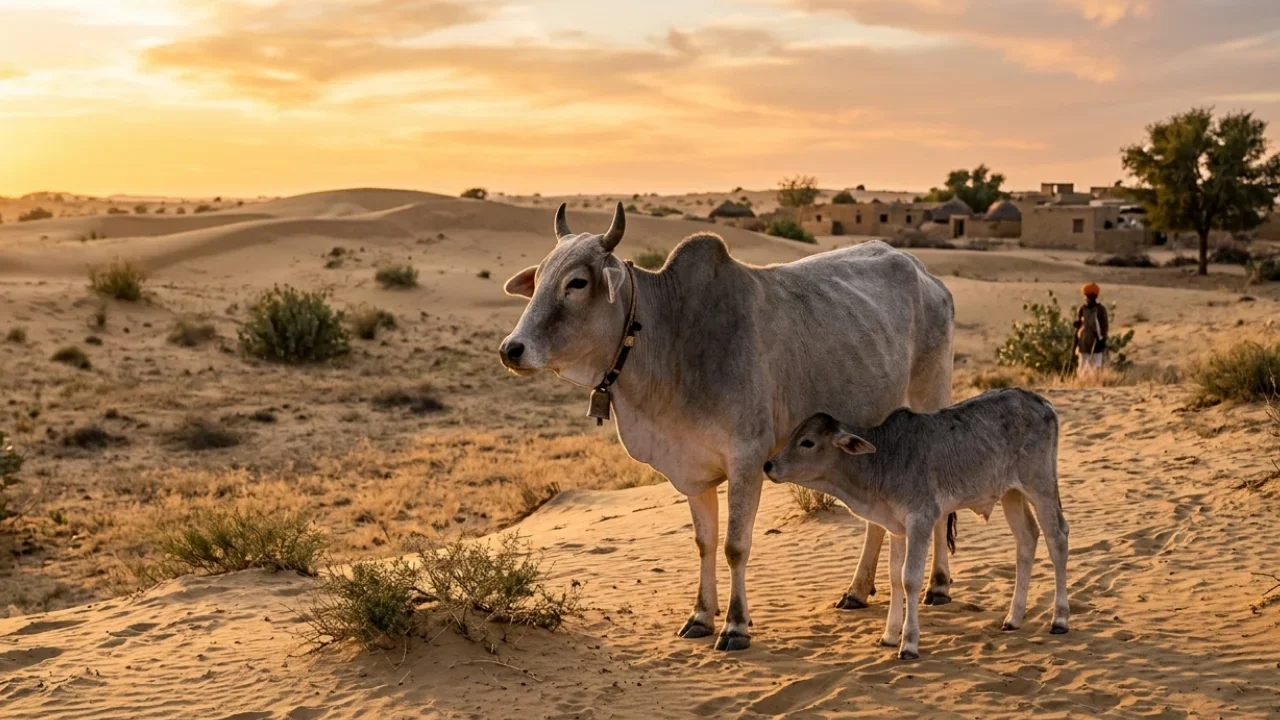
Indigenous cow breeds have played a vital role in India’s agricultural and nutritional traditions for centuries. Among them, the Tharparkar cow stands out for its remarkable resilience and ability to thrive in the harsh desert climate of Rajasthan. This breed has naturally adapted to extreme temperatures, limited water availability, and challenging grazing conditions.
Unlike commercial dairy breeds that require intensive care and controlled environments, Tharparkar cows are known for their natural endurance and sustainable grazing habits. Their ability to convert native vegetation into nutrient-rich milk makes them highly valuable in traditional dairy production, particularly for products such as A2 milk, butter, and Bilona ghee.
For communities that value natural farming and traditional food systems, the Tharparkar cow represents a perfect balance between resilience, productivity, and sustainability.
Natural Adaptation to Desert Conditions
The Tharparkar breed originates from the Thar Desert region, where environmental conditions are often extreme. To survive in such an environment, these cows have developed unique physical and biological characteristics.
Their light-coloured coat helps reflect intense sunlight, reducing heat absorption and allowing them to remain active even in high temperatures. In addition, their strong immunity and efficient metabolism enable them to survive with limited water and forage resources.
These natural adaptations make the Tharparkar cow one of the most resilient indigenous breeds in the region and a valuable asset for sustainable rural livestock farming.
Natural Grazing and Nutrient-Rich Milk
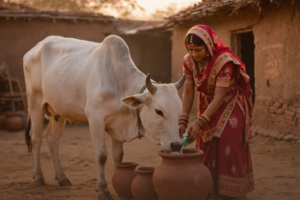
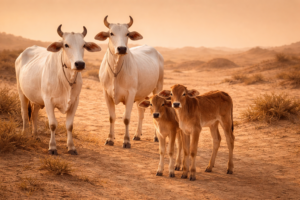
A key advantage of indigenous cows like the Tharparkar breed is their free-grazing lifestyle. Rather than being confined to controlled feeding systems, they roam freely and graze on a wide variety of native grasses and medicinal plants.
The desert vegetation contains minerals and bioactive compounds that develop as plants adapt to the harsh environment. When cows consume these plants, the nutrients become part of the milk they produce.
This natural grazing process contributes to milk that is:
• Rich in essential nutrients
• Naturally balanced in fats
• Suitable for traditional dairy products
• Ideal for preparing high-quality Bilona ghee
The result is milk that reflects the natural ecosystem in which the cows are raised.
“Indigenous cow breeds are an essential part of sustainable agriculture, offering resilience, natural nutrition, and harmony with the environment.”
Tharparkar cows are also valued for producing A2 type milk, which is commonly associated with traditional Indian cattle breeds. This milk is widely used in the preparation of traditional dairy products because of its natural composition and flavour.
Beyond milk production, these cows contribute significantly to rural livelihoods through organic manure, traditional fuel sources, and ingredients used in Ayurvedic formulations. This makes them an integral part of a balanced and sustainable agricultural system.
Preserving Indigenous Cattle Heritage
In recent decades, many indigenous cattle breeds have declined due to the expansion of industrial dairy farming. Preserving breeds like the Tharparkar cow is therefore essential for maintaining biodiversity and protecting traditional agricultural knowledge.
Initiatives such as Gau Mandir Satva work towards protecting indigenous cows while promoting products derived from traditional dairy methods. By supporting such initiatives, consumers contribute to the welfare of cows, the preservation of traditional practices, and the sustainability of rural communities.
The Tharparkar cow is more than a source of milk—it represents a living heritage of resilience, natural farming, and timeless wisdom.